 Reviews

 Proudly American

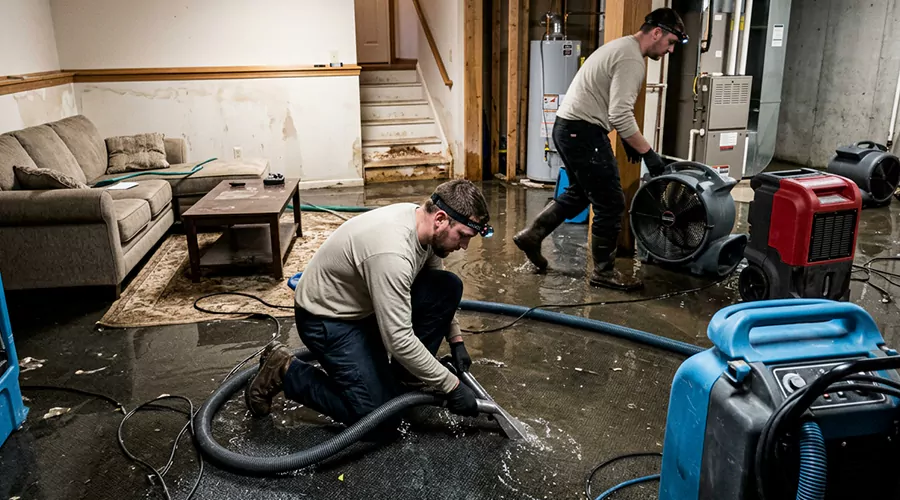
To clean up a flooded basement safely, control the water source first and confirm that electricity does not create a hazard before entering. Standing water should then be removed before damaged materials are sorted and the basement is dried. In 2026, professional cleanup commonly costs about $2,000 to $7,000.
A flooded basement can become more difficult to restore when water stays in place. Drywall or carpet can absorb moisture well above the visible water line. Mold can also develop on wet building materials after about 24 to 48 hours.
The source of the water changes how cleanup should be handled. A burst clean-water pipe is very different from groundwater or sewage entering the basement.
Is It Safe to Enter a Flooded Basement?
A flooded basement shouldn't be entered until electrical hazards and structural conditions have been considered. Standing water can become energized when it reaches wiring or appliances. Outdoor floodwater may contain sewage or chemicals. A sagging ceiling or damaged foundation wall can create another reason to stay out.
Do not walk through standing water to reach the electrical panel. If the breaker cannot be reached from a completely dry location, leave the power shutoff to the utility or a qualified electrician.
Stay out of the basement when:
- Water has reached electrical outlets.
- Appliances are partly submerged.
- The breaker panel is surrounded by water.
- Sewage is visible or suspected.
- Outdoor floodwater has entered the building.
- The foundation wall appears cracked or displaced.
- A ceiling is sagging.
- You smell gas or another unusual chemical odor.
Floodwater cleanup also requires protective clothing. Gloves and waterproof boots reduce direct contact with contaminated material. An N95 respirator and eye protection are appropriate when mold or contaminated debris may be disturbed.
What Should You Do First When the Basement Floods?
The first response should focus on stopping additional water and documenting what happened before major cleanup begins. If the source is a broken plumbing line, shut off the water when it can be reached safely. Stormwater or groundwater may continue entering until outside conditions change.
Use this order:
- Keep everyone away from unsafe standing water.
- Stop the water source when possible.
- Photograph the basement before moving damaged items.
- Record the approximate water depth.
- Move accessible valuables from dry areas.
- Determine where the water probably came from.
- Begin removal only when conditions are safe.
Take wide photographs of the entire basement and closer photos of damaged materials. Record the visible water line when one exists.
Documentation can be useful if an insurance claim is later filed. Keep receipts for equipment rentals or emergency repairs as cleanup continues.
How to Clean Up a Flooded Basement Step by Step?
Basement flood clean up should move from safety to extraction before detailed cleaning begins. Once standing water is gone, wet materials can be evaluated and the structure can begin drying. Cleaning or rebuilding too early can trap moisture behind finishes and create another problem later.
Step 1: Identify the Source of the Flood
Finding the source helps determine both the safety risk and the chance of another flood occurring during cleanup.
Common basement flood sources include:
- Burst plumbing pipes
- Failed water heaters
- Sump pump failures
- Sewer backups
- Foundation seepage
- Groundwater after heavy rain
- Window well flooding
- Failed appliance connections
A broken supply pipe can usually be controlled by shutting off the water. Groundwater may continue entering while surrounding soil remains saturated.
A sewer backup requires a more cautious response. Sewage cleanup in basement spaces shouldn't be treated like ordinary water extraction because contaminated materials can create health risks.
Step 2: Remove Standing Water Safely
Standing water should be extracted once electrical safety has been established and the source is under control. Shallow clean water may be manageable with equipment rated for wet use. Deeper flooding usually requires a pump.
Equipment can include:
- Submersible pumps for deeper water
- Wet and dry vacuums for shallow water
- Floor squeegees for remaining surface water
- Extraction equipment for saturated carpet
Never use an ordinary household vacuum for water.
Basement flood water removal also needs extra caution after widespread outdoor flooding. FEMA guidance warns that rapidly emptying a basement while groundwater remains high outside can create harmful pressure against foundation walls.
If the basement flooded because surrounding groundwater is still high, don't assume the fastest possible pump-out is automatically the safest approach. Structural conditions should guide the removal rate.
Step 3: Remove Wet Belongings
Once standing water has dropped enough for safe access, move wet belongings into a suitable sorting area. Keeping soaked items in the basement slows drying because they continue releasing moisture into the air.
Sort belongings into practical groups:
- Clean items that only need drying
- Items that can be washed
- Porous items that require evaluation
- Items that cannot be safely restored
- Important documents or valuables needing special treatment
Cardboard boxes usually absorb water quickly. Moving contents into clean plastic containers can prevent additional loss when the contents themselves remain salvageable.
Furniture should not be moved directly onto dry finished flooring while its legs or base remain wet.
Step 4: Remove Saturated Carpet and Padding
Carpet can hide a large amount of water below the visible fibers. Padding absorbs moisture quickly and can keep the subfloor damp after the upper carpet begins feeling dry.
Flooded basement carpet cleanup starts by checking how the carpet became wet. Clean-water exposure discovered quickly may allow more material to be saved.
Flooded carpet drying should address the carpet backing and subfloor rather than only the upper fibers.
Carpet is more likely to require removal when:
- Sewage reached the carpet.
- Outdoor floodwater entered the basement.
- Padding stayed saturated for an extended period.
- A strong odor remains.
- Mold growth is visible.
- The subfloor cannot dry while the carpet remains installed.
Removing the padding can also expose moisture that has traveled under nearby finished flooring.
Step 5: Check Drywall and Insulation
Drywall can absorb water above the visible flood line through capillary movement. Insulation behind the wall can hold additional moisture.
Inspect the lower parts of finished basement walls for:
- Soft drywall
- Swollen baseboards
- Peeling paint
- Dark staining
- Damp insulation
- Musty odor
- Visible mold
- Crumbling gypsum
Basement water damage cleanup becomes more involved when water has entered closed wall cavities. Surface drying cannot remove all moisture trapped behind finished materials.
Flood-soaked porous material that cannot be cleaned or completely dried may need removal. The amount removed should be based on actual damage rather than automatically stripping every wall in the basement.
Step 6: Dry the Basement Completely
Drying begins after bulk water and unsalvageable wet materials have been removed. Air movers can increase evaporation while dehumidifiers remove moisture from the surrounding air.
A practical drying setup can include:
- Dehumidifiers
- Air movers
- Open interior doors
- Open cabinets
- Moisture meters
- Controlled ventilation when outdoor humidity is lower
Basement water mitigation should focus on the moisture hidden inside materials rather than how the room feels. A cool concrete floor can appear dry while nearby drywall or wood framing remains damp.
Drying after major flooding can take several days or even weeks. EPA guidance states that materials should be dried as quickly as possible because mold can grow when wood or drywall remains wet for more than about 24 hours.
Step 7: Clean Flooded Surfaces
Cleaning should begin after loose debris has been removed. Flood-affected hard surfaces can first be cleaned with clean water and detergent to physically remove dirt.
For surfaces that can safely be cleaned:
- Remove loose debris gently.
- Wash the surface with water and detergent.
- Follow the cleaner's label instructions.
- Apply an appropriate disinfectant when needed.
- Allow the material to dry completely.
Don't mix cleaning chemicals. Bleach should never be mixed with ammonia or other products because dangerous vapors can form.
Basement water remediation may require more than disinfecting surfaces when contaminated water has entered porous materials. Cleaning chemicals cannot make severely contaminated insulation or carpet padding suitable for reuse.
What Can You Save After a Basement Flood?
Nonporous materials are usually easier to clean after flooding because water doesn't soak deeply into them. Porous materials need closer evaluation because they can trap moisture or contamination. The water source also matters. Items touched by sewage or outdoor floodwater require greater caution than items exposed to clean plumbing water.
Use this general comparison:
| Material | Often Can Be Saved | Replacement More Likely When |
|---|---|---|
| Concrete | Cleaned and dried | Severe contamination remains in cracks |
| Ceramic tile | Tile remains bonded | Subfloor or backing is damaged |
| Solid wood | Clean water exposure with fast drying | Severe warping or deterioration |
| Drywall | Very limited clean-water exposure | Soft or contaminated |
| Carpet | Limited clean-water exposure | Floodwater or sewage exposure |
| Carpet padding | Rare limited situations | Saturated or contaminated |
| Fiberglass insulation | Limited exposure in some cases | Heavily soaked or contaminated |
| Particleboard | Very minor exposure | Swollen or crumbling |
| Upholstered furniture | Limited clean-water exposure | Deep contamination or persistent odor |
Black water flood damage usually results in more material removal because contamination becomes part of the decision.
Don't judge an item only by whether it still looks normal. A porous material can contain water long after its surface changes back to its original color.
How Do You Know When the Basement Is Dry?
A basement is dry when affected materials have returned to acceptable moisture levels rather than simply looking dry. Floors or walls can hold moisture beneath the surface for days. A moisture meter can provide more useful evidence than touch alone before flooring or wall finishes are replaced.
Check drying progress by:
- Comparing affected material with a dry area
- Using a moisture meter on walls
- Checking wood framing where accessible
- Monitoring indoor humidity
- Inspecting the concrete floor before new flooring
- Watching for returning condensation
- Checking for musty odor
EPA flood guidance states that materials should generally read 15 percent moisture content or less before refinishing.
Concrete requires a different check. One simple test is to secure clear plastic sheeting over part of the slab for about 16 hours. Moisture appearing beneath the plastic indicates that the concrete still needs more drying time.
Don't install new carpet or flooring over damp concrete. Trapping moisture under the new floor can create odor or mold problems later.
How Much Does Flooded Basement Cleanup Cost in 2026?
Flooded basement cleanup cost averages about $4,000 in 2026, with many projects falling between $2,000 and $7,000. Small clean-water losses can cost less. Sewage contamination can push the total toward $15,000 when removal or sanitation becomes extensive.
Current national estimates show these general ranges:
| Basement Flood Condition | Typical 2026 Cleanup Cost |
|---|---|
| Clean water | $1,500 to $3,500 |
| Gray water | $3,000 to $7,000 |
| Sewage or highly contaminated water | $7,000 to $15,000 |
| Typical overall project | $2,000 to $7,000 |
| Mold treatment when needed | $500 to $6,000 |
Basement size also affects price. Current estimates put cleanup around $3 to $7 per square foot for many projects.
A finished basement usually costs more to restore than an unfinished one because water can damage carpet or drywall. Cabinets and insulation can add further repair work.
Basement flood damage repair comes after the extraction and drying stages. Reconstruction costs can therefore increase the total beyond the initial cleanup estimate.
What Warning Signs Mean the Damage Is More Serious?
A basement flood becomes more serious when moisture has entered finished materials or structural components. Visible standing water is only one measure of severity. Water inside walls can remain after extraction ends. Contamination also raises the level of risk even when the water depth was relatively low.
Watch for these warning signs:
- Drywall feels soft above the water line.
- Baseboards begin swelling or separating.
- Flooring starts buckling.
- Water reached electrical outlets.
- A foundation wall develops a new crack.
- The floor feels soft under finished material.
- Sewage odor remains after water removal.
- Mold becomes visible.
- A musty smell grows stronger each day.
- Water keeps reappearing after extraction.
- Ceiling material begins sagging.
- Moisture readings stay elevated after several days.
Basement restoration becomes more complex when several of these signs occur at the same time.
Repeated water entry is another warning. Removing the water doesn't correct the basement if the original drainage or plumbing problem remains.
When Should You Call a Professional?
Professional help is appropriate when the basement contains sewage or outdoor floodwater. Large water volumes also require stronger extraction equipment. Electrical exposure or structural movement creates another reason to stop DIY work. Hidden moisture inside finished walls can also make professional testing useful.
Consider professional help when:
- Water is deep or still rising.
- Electricity may be present in the flooded area.
- Sewage entered the basement.
- Outdoor floodwater entered the home.
- Several finished rooms are affected.
- Drywall is saturated.
- Insulation is wet.
- Mold growth covers a large area.
- The foundation appears damaged.
- The basement cannot be dried after several days.
- Water keeps returning.
- You cannot identify the source.
Water removal basement projects can require high-capacity pumps when the water volume exceeds household equipment.
A professional can also check moisture inside walls before reconstruction starts. That prevents new finishes from covering materials that are still wet.
How Can You Prevent Another Basement Flood?
Preventing another flood requires correcting the route that allowed water into the basement. A sump pump can help with groundwater while roof drainage should move rain away from the foundation. Plumbing leaks need a different correction. The prevention method should match the original cause.
A useful maintenance routine includes:
- Test the sump pump before heavy rain.
- Inspect the sump discharge pipe.
- Consider a battery backup for power outages.
- Clean gutters when drainage becomes restricted.
- Extend downspouts away from the foundation.
- Inspect foundation cracks.
- Check basement windows for failed seals.
- Watch floor drains for slow drainage.
- Inspect plumbing lines regularly.
- Keep stored valuables above floor level.
Basement cleanup after flood events shouldn't end without finding the cause. A basement that has dried completely can flood again if drainage or pumping problems remain unchanged.
The cost of prevention can also be lower than another cleanup. A new sump pump commonly costs hundreds to a few thousand dollars while a major contaminated flood can reach five figures.
Conclusion
Cleaning up a flooded basement starts with safety and controlled water removal before drying or rebuilding begins. The source of the flood determines what can safely be saved. Hidden moisture in walls or flooring can remain after visible water disappears. Sewage and major flooding usually need professional assessment. This week, test your sump pump and check how your downspouts move rainwater away from the foundation.
Frequently Asked Questions
How soon should a flooded basement be cleaned up?
Cleanup should begin as soon as the water source is controlled and the space is safe. Wet materials should be dried quickly because mold can begin growing within about 24 to 48 hours.
Can I use a shop vacuum in a flooded basement?
A wet and dry vacuum can help with shallow clean water after electrical safety has been confirmed. Never use an ordinary household vacuum for water.
Should I throw away carpet after a basement flood?
Not every clean-water event requires carpet replacement. Carpet exposed to sewage or outdoor floodwater is much less likely to be suitable for normal cleaning and reuse.
Can I run fans immediately after a basement flood?
Fans can help after loose contamination and visible mold have been addressed. EPA guidance cautions against using fans in a way that spreads mold or contaminated material through the home.
How long does a flooded basement take to dry?
Drying can take several days or longer depending on the materials and humidity. Hidden moisture inside walls or flooring may remain after exposed surfaces look dry.
Does homeowners insurance cover a flooded basement?
Coverage depends on the source of the water and the individual policy. Standard homeowners insurance often treats plumbing leaks differently from outside flooding or sump pump backups.